Exploring 2D and 3D world creation using an LWM (Large World Model)
Project Context
explores the transition from static 3D CAD geometry to generative world-building. The goal was to test how a Spatial Intelligence model interprets the intricate, "bubbly" shells and section cuts of the project when tasked with "lifting" 2D visual cues into a navigable 3D environment.
The Rhino-to-Point Cloud Pivot : try 1
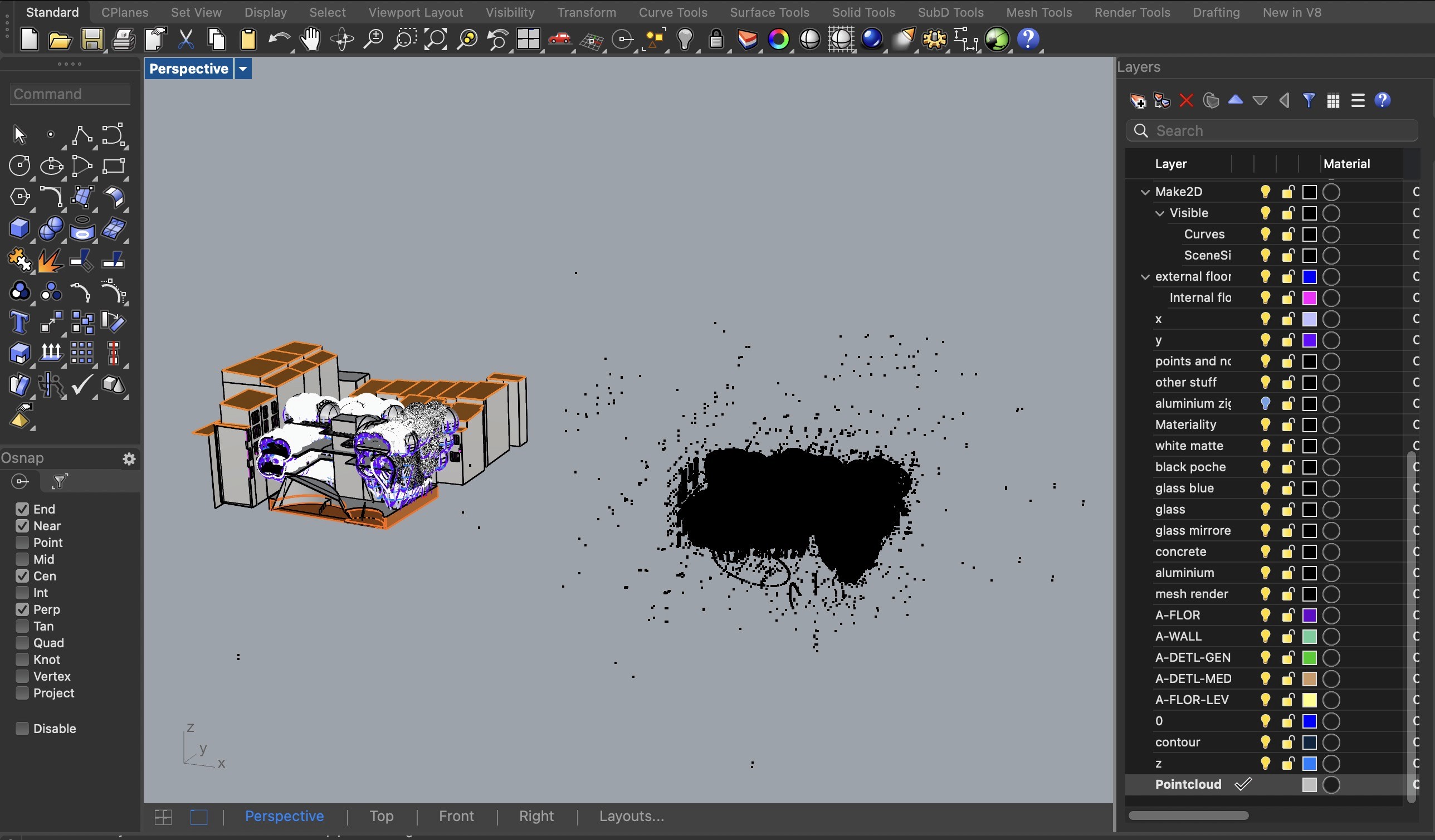
I started the project with an existing Rhino model I designed for my thesis at SCI-Arc. Hoping to reconstruct a point cloud using world labs and see the outcome. I tested out exporting the model as a .ply file and discovered the export wasn't a point cloud but rather a mesh.
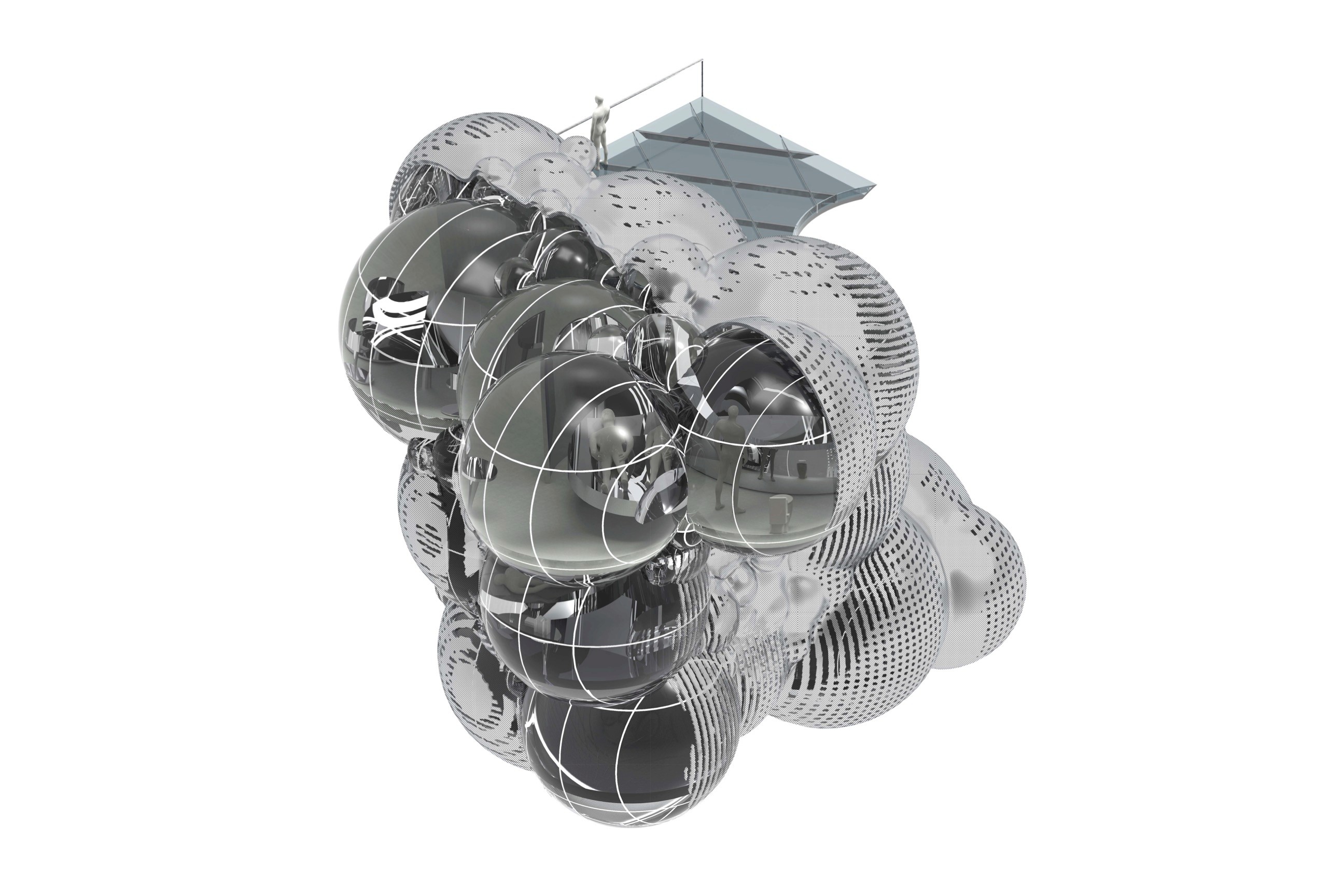
The Original SCI-Arc thesis Chunk Render
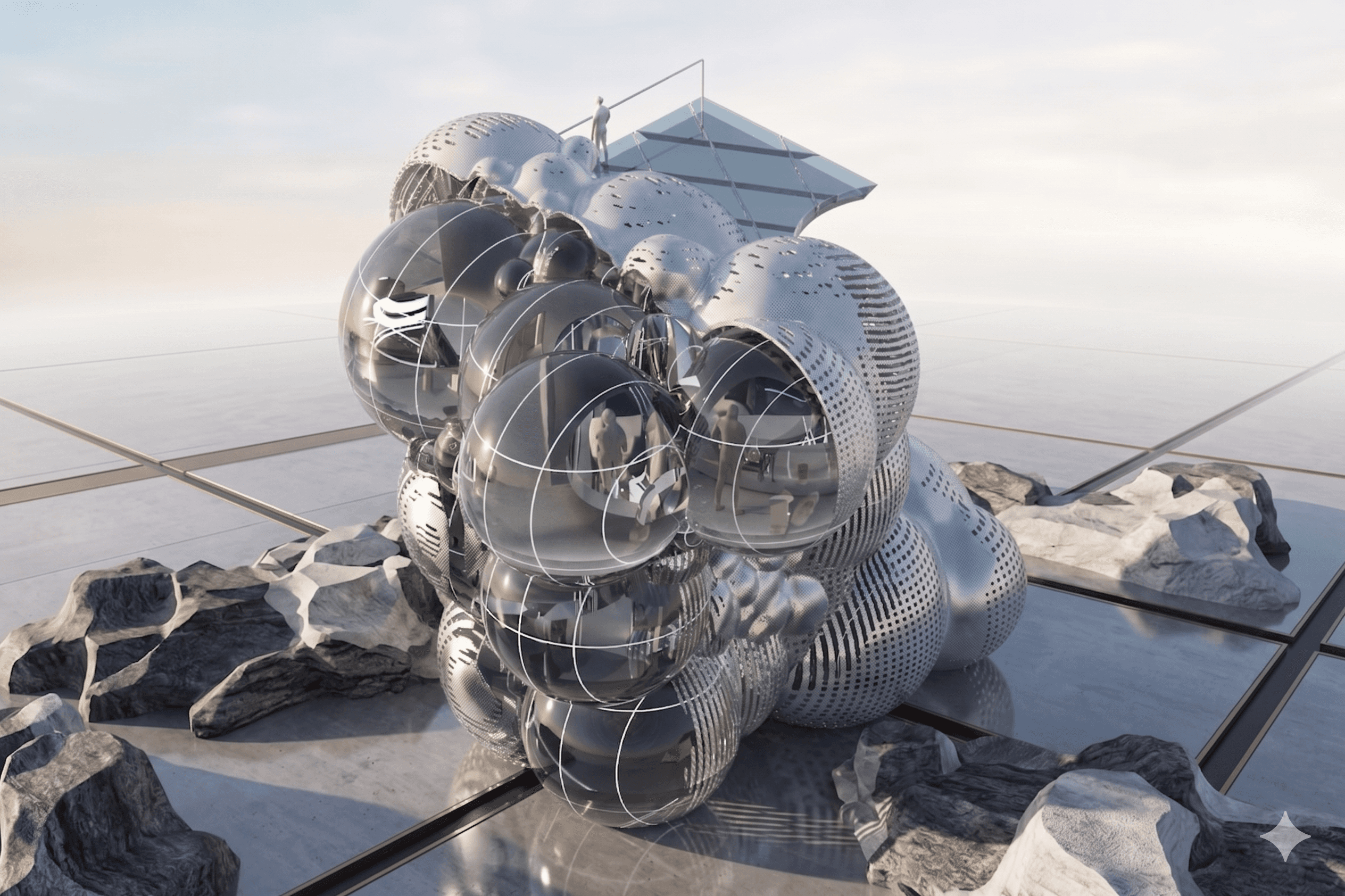
I then tried using 2D images to recreate the 3D model and soon found out the 2D image needed a ground plane. So I used Geminis image creator to add a ground plane to my 3D chunk render to provide the LWM with a consistent horizon line for better depth estimation.
Adding A Ground Plane With Gemini
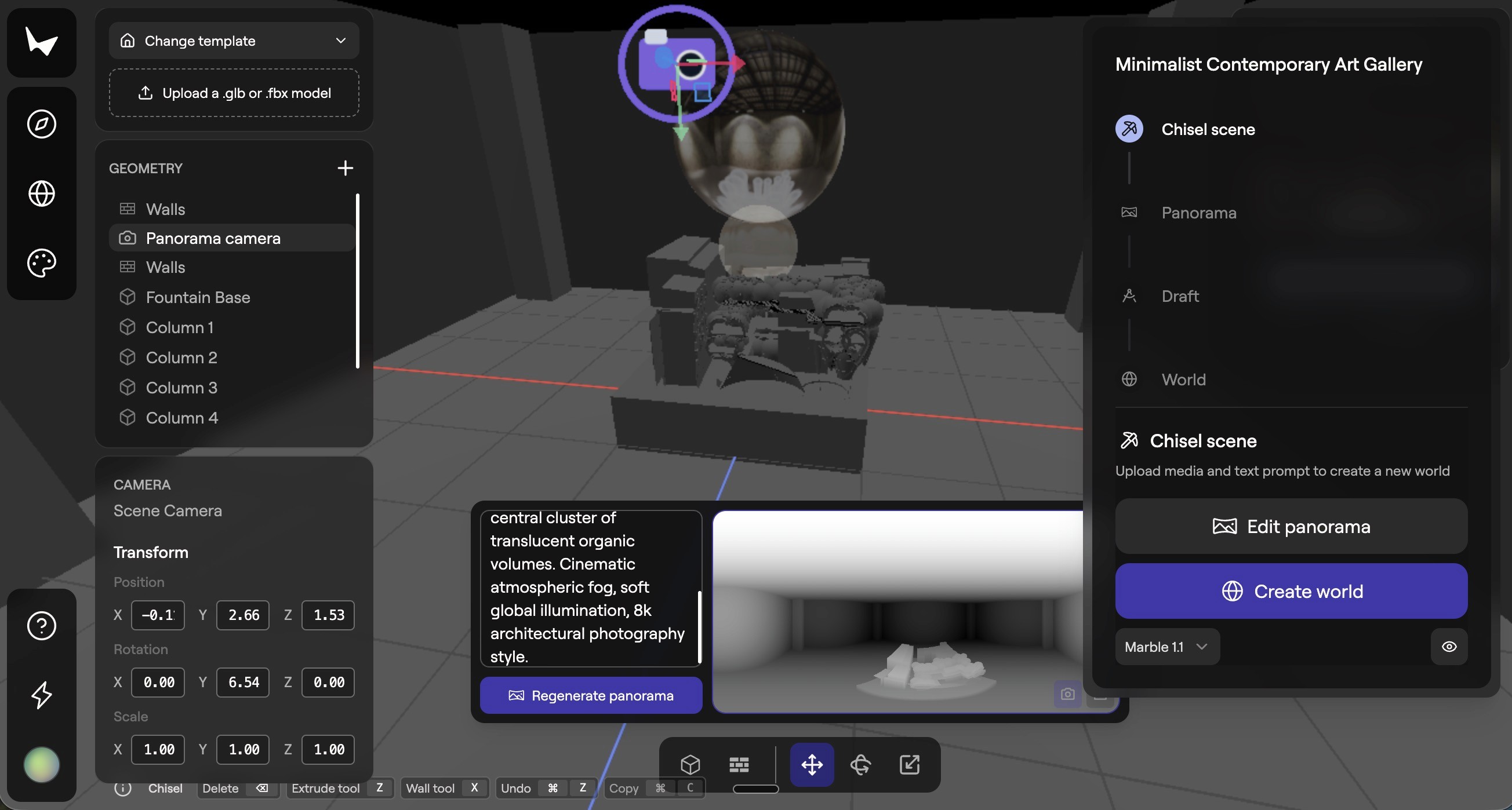
Creating a Panorama with a prompt
The way the LLM works is with an initial prompt that creates a Panorama (uses less credit). it took me a while to connect the dots between the panorama and world model, but I finally figured it's purpose out after a few tries.
Reflections
The Translation Gap: This experiment highlighted the friction between top-down modeling (where every coordinate is fixed in Rhino) and bottom-up inference (where a World Model "guesses" the volume based on lighting and texture).
Atmospheric over Geometric: The LWM prioritized atmospheric persistence and cinematic lighting over the razor-sharp geometric precision required for technical architectural representation.
The Material Confusion of Chrome: Highly reflective surfaces like the "chrome bubbles" created a reconstruction paradox; the AI interpreted the reflections as separate physical volumes, leading to the "ghosting" artifacts and volumetric blur seen in the final world.
Spatial Intelligence vs. CAD: The project tested the limits of Neural Radiance Fields (NeRF) and Gaussian Splatting, proving that while AI can "dream" a convincing 360-degree environment, it currently lacks the semantic understanding to distinguish between a solid wall and a reflection.