Reimagining Perception and Space in Social Housing
I earned my Bachelor of Architecture from the Southern California Institute of Architecture (SCI-Arc), a globally recognized institution known for its emphasis on experimental design and systems thinking. My training there shaped how I approach complex, human-centered problems through spatial reasoning, structured frameworks, and iterative exploration.
For my thesis, I explored how spatial configurations can be reinterpreted to improve occupant experience in compact housing environments. The work focused on perception, materiality, and spatial interaction, examining how architectural surfaces can be designed to influence how people experience and inhabit constrained spaces.
INSTITUTION
Southern California Institute Of Architecture
TEAM
Solo
LOCATION
Los Angeles
EXPERTISE
Spatial Design, 3D Printing powder &
ABS), Z Brush, Maya, Physical
Fabrication
Social housing often features compact, constrained living spaces that can feel restrictive and monotonous. This thesis explores the problem -
How can architectural form and material systems be reimagined to alter occupants’ perceptions of space and enhance experiences within compact dwellings?
Initial explorations into Phydigital
To explore the convergence of physical and digital space, I fabricated a 3D-printed interior shell, laminated it with a transparent outer layer, and integrated holographic projection. This study examined how materiality and layered media can alter spatial perception and influence how space is experienced.
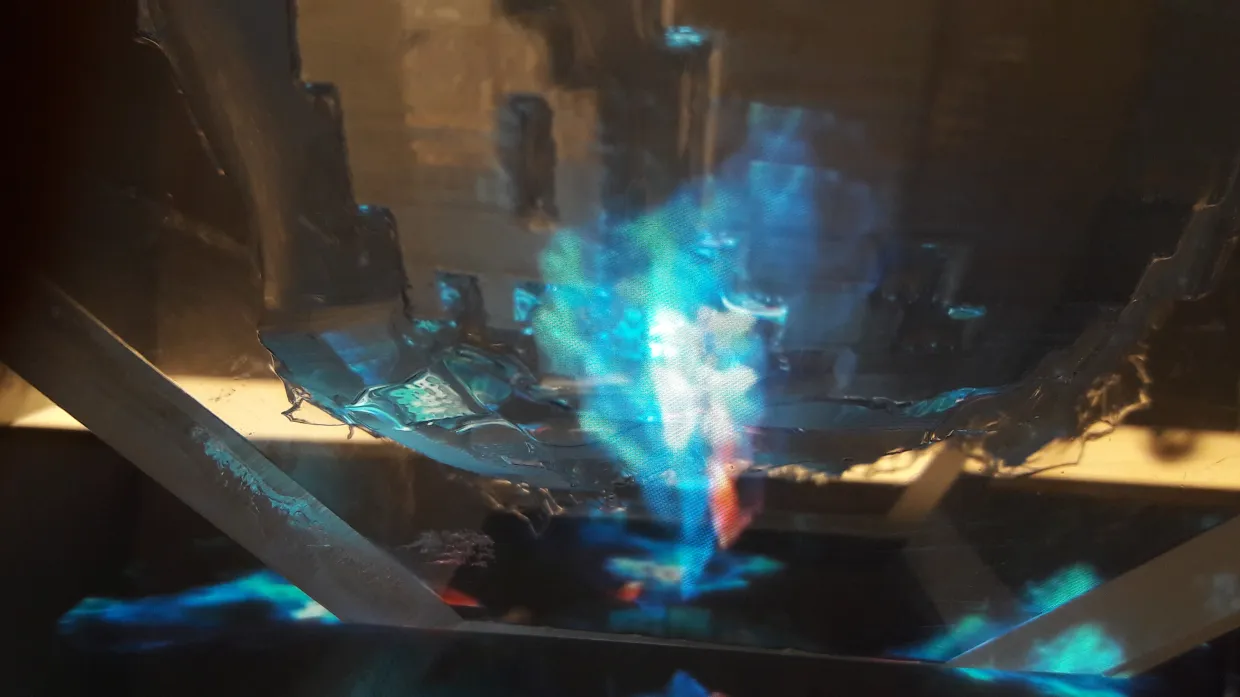
Modular Spatial Perception Exploration
To further explore the effect of mirroring on spatial perception, I conducted a series of focused studies.
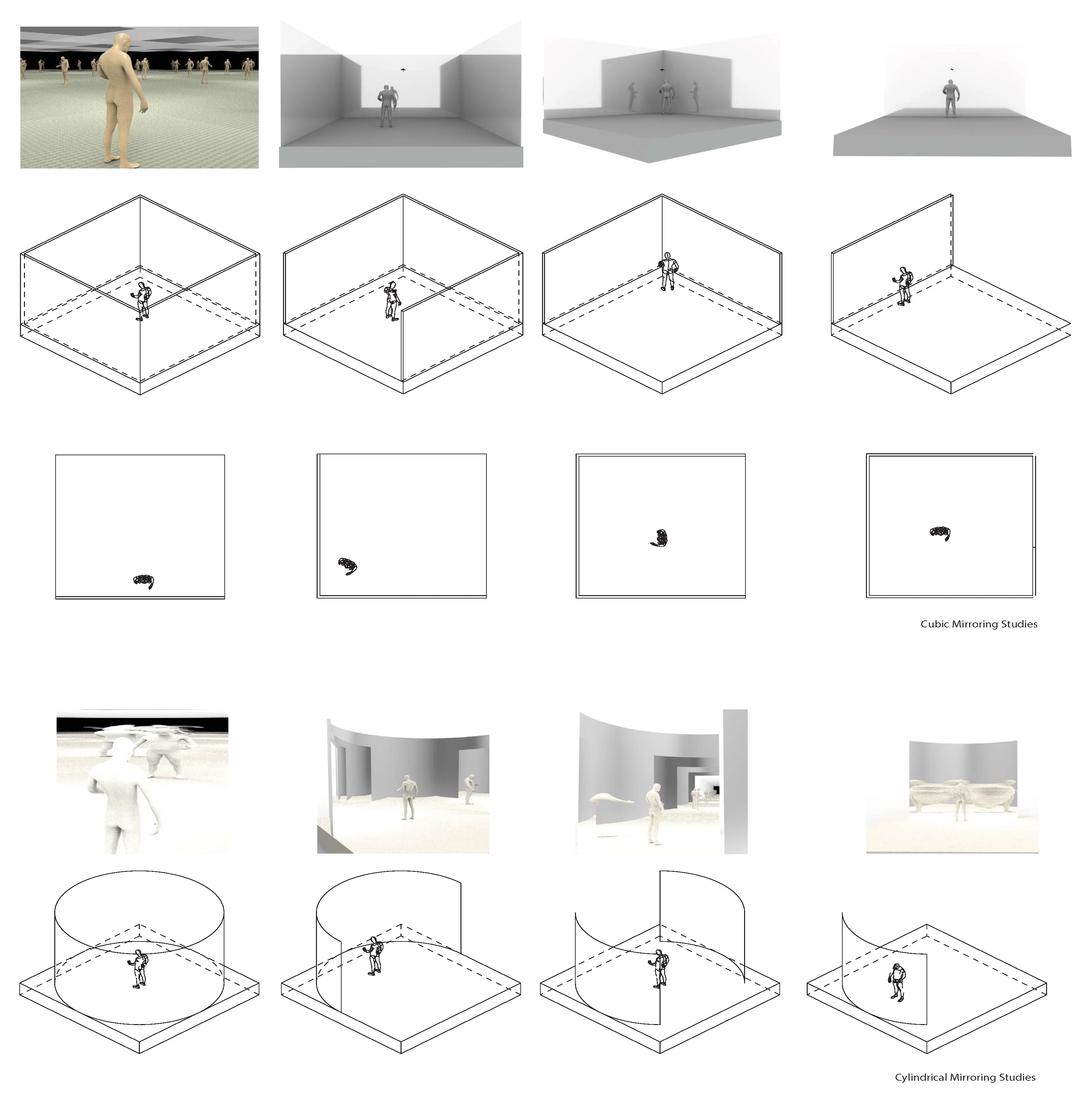
Perception Studies: Modules to Room Scale
Building on the modular studies, I extended the investigation to room scale to evaluate how mirroring alters spatial experience at human scale.
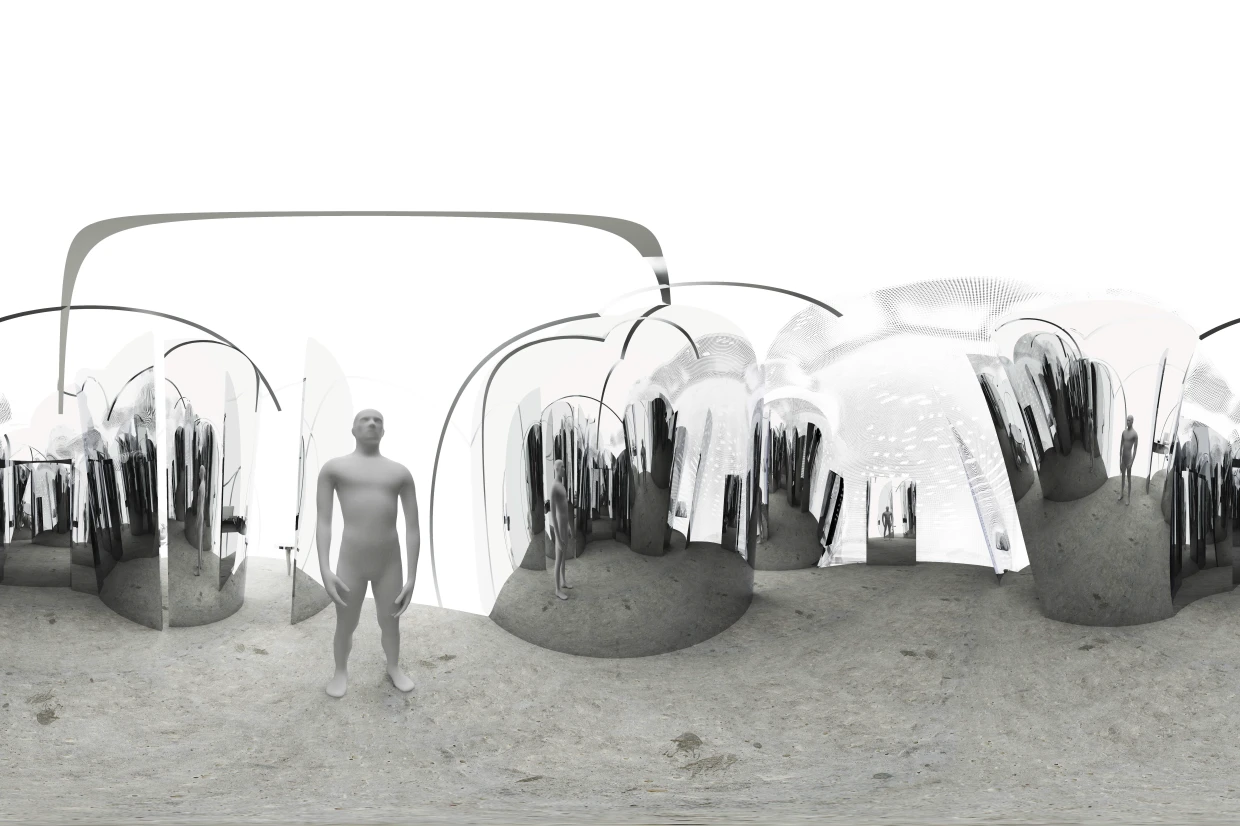
Layered Exterior Skin
The exterior envelope uses a double mesh over glass. The mesh pattern was calibrated to manipulate light and shape interior spatial conditions.
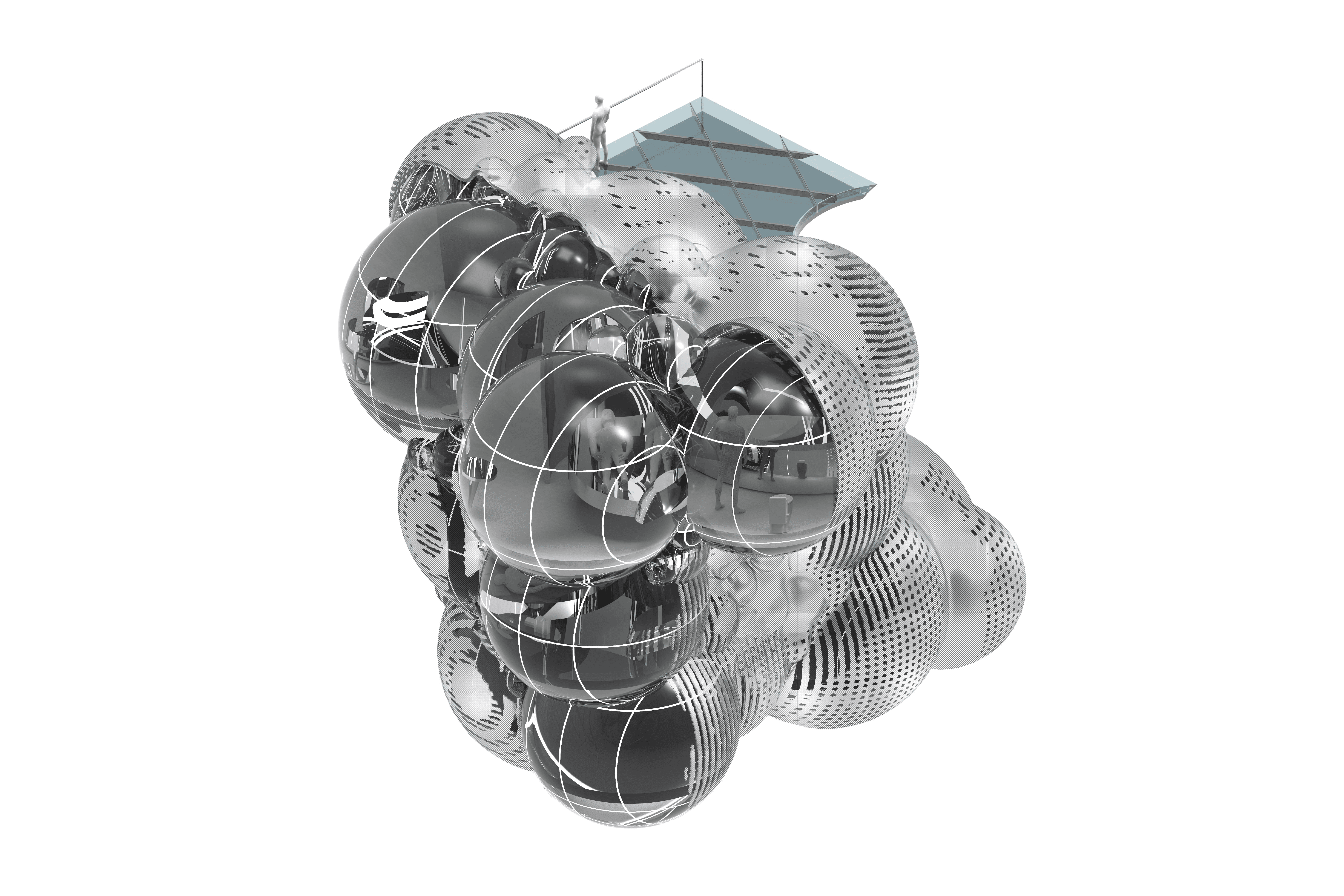
The result : Social Housing 2.0
This thesis sharpened my ability to combine physical and digital prototyping with perceptual thinking. It reflects my strength in iterative design, material experimentation, and spatial problem-solving - skills I continue to apply in design roles focused on experience, interaction, and system thinking.
The final deliverable was a set of architectural drawings that were presented during my thesis review to a jury that included leading architects such as Sir Peter Cook. In parallel, I fabricated a six-foot sectional model to physically demonstrate the spatial and material logic of the project.
The model was constructed using a combination of:
A CNC-milled top component
A powder-printed building core
PLA 3D-printed facade elements, produced on a desktop printer by slicing the digital model into modular sections and assembling them into a full-scale representation for the final presentation
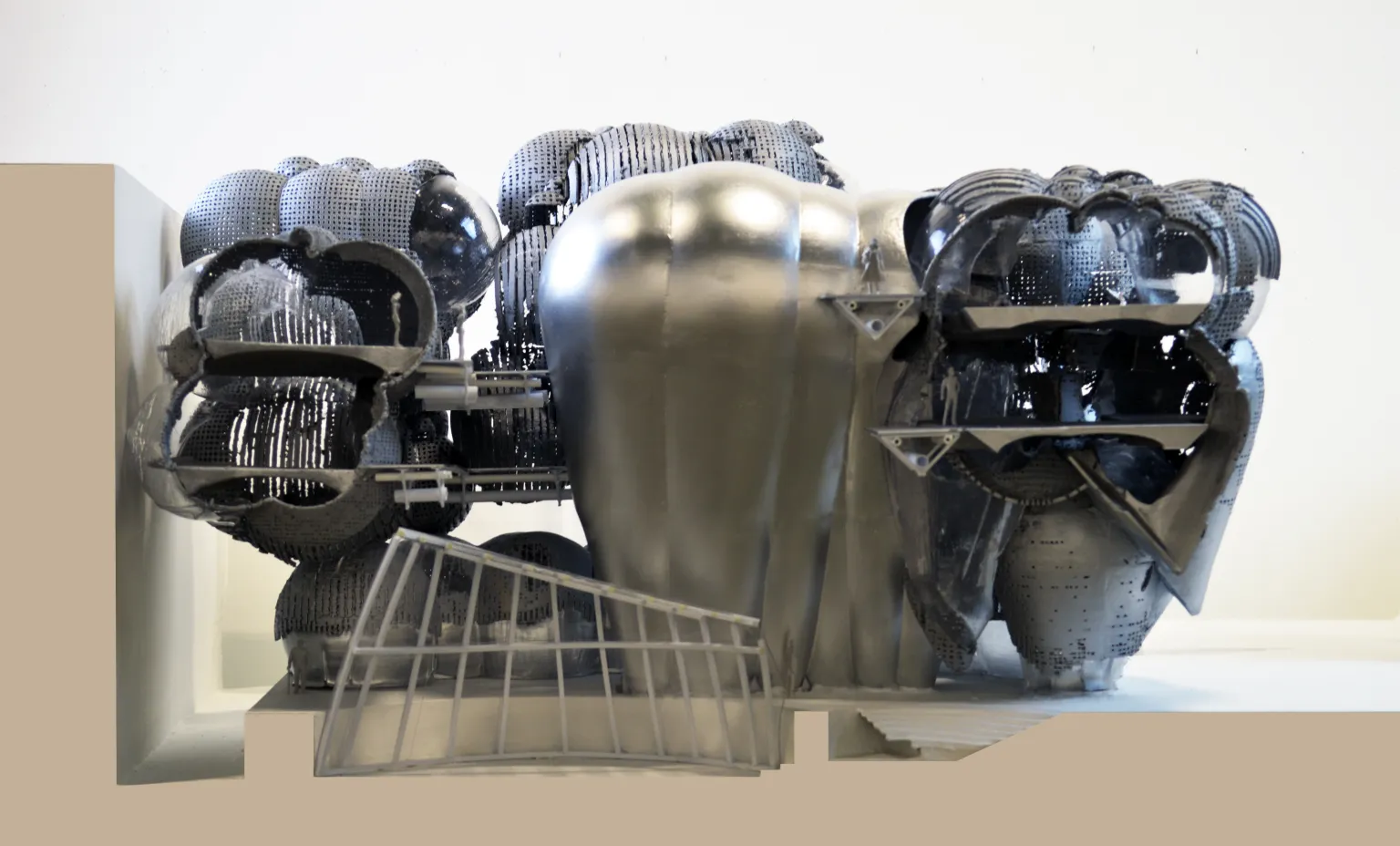
The final physical model
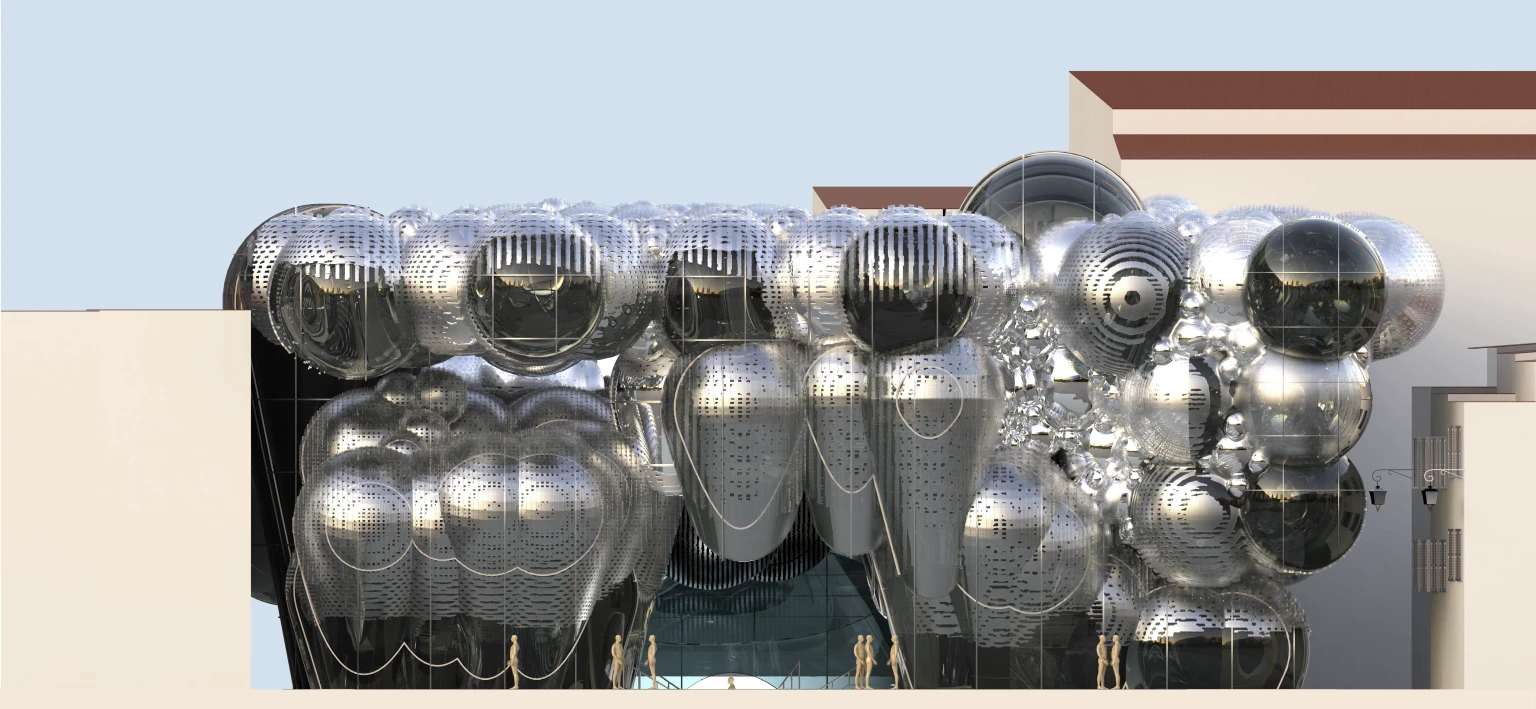
Elevation

Floor plans