Tarun Hari
Tarun Hari
Automated Design Intelligence
Automated Design Intelligence
Building on an architectural background, this project represents an early exploration into computational and robotic systems as active agents in physical space. This project laid the groundwork for my continued interest in physical–digital systems and intelligent behavior within built environments.
Building on an architectural background, this project represents an early exploration into computational and robotic systems as active agents in physical space. This project laid the groundwork for my continued interest in physical–digital systems and intelligent behavior within built environments.
INSTITUTION
INSTITUTION
Southern California Institute Of Architecture
Southern California Institute Of Architecture
TEAM
TEAM
Shilpa Sushil, Emre Turan, Tarun Hari, Ivy Chan, Yichao Li
Shilpa Sushil, Emre Turan, Tarun Hari, Ivy Chan, Yichao Li
LOCATION
LOCATION
Los Angeles
Los Angeles
EXPERTISE
EXPERTISE
Robotics & Spatial
Robotics & Spatial
Project Context
Project Context
Project Context
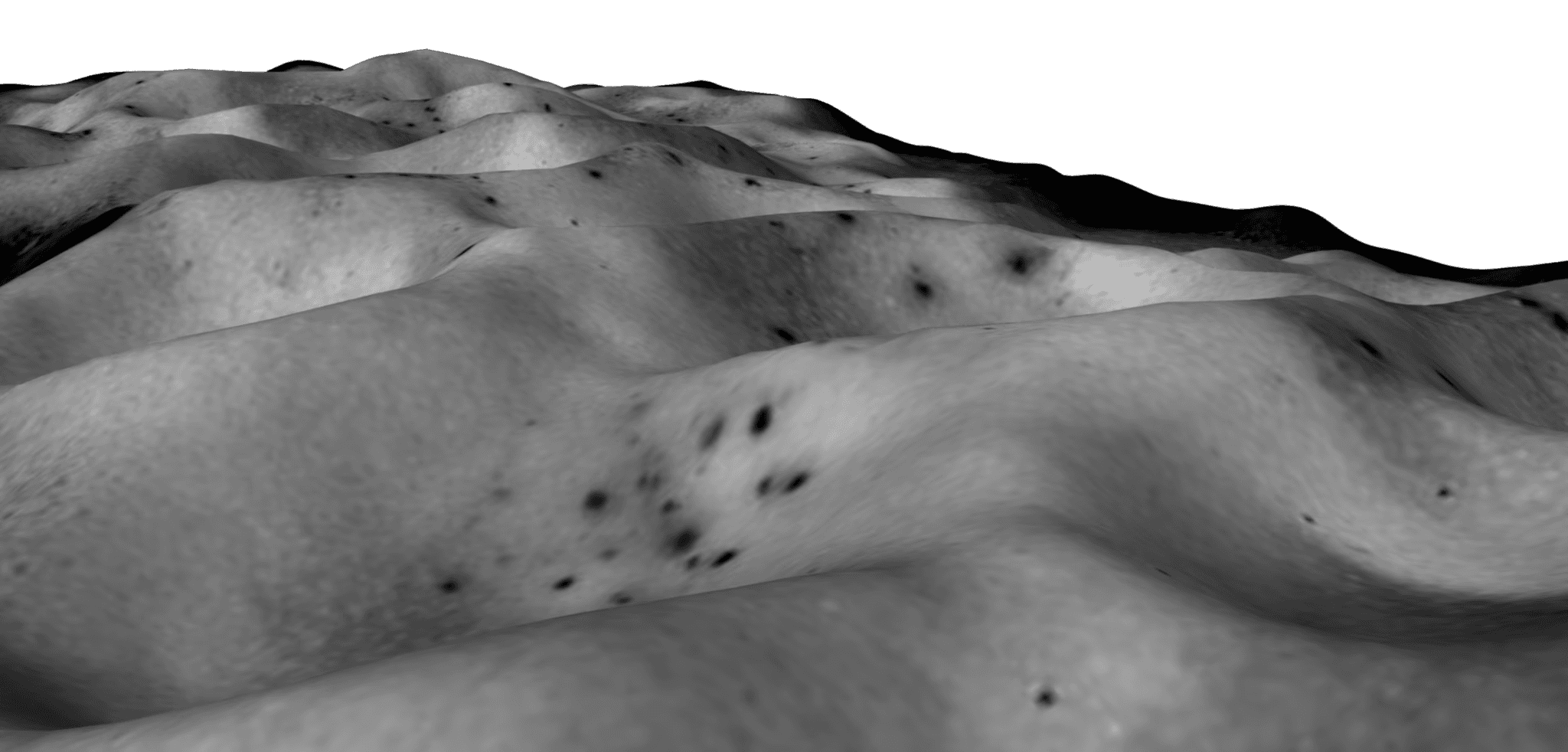
The exterior of a building is traditionally designed around standardized fabrication constraints. This project explores an alternative approach to exterior panel design by integrating natural biological processes with robotic fabrication. By shifting the role of the façade from a static enclosure to a generative system, the work investigates how robotics can enable new material behaviors and design outcomes.
A 3D dataset from desert terrain
A 3D dataset from desert terrain
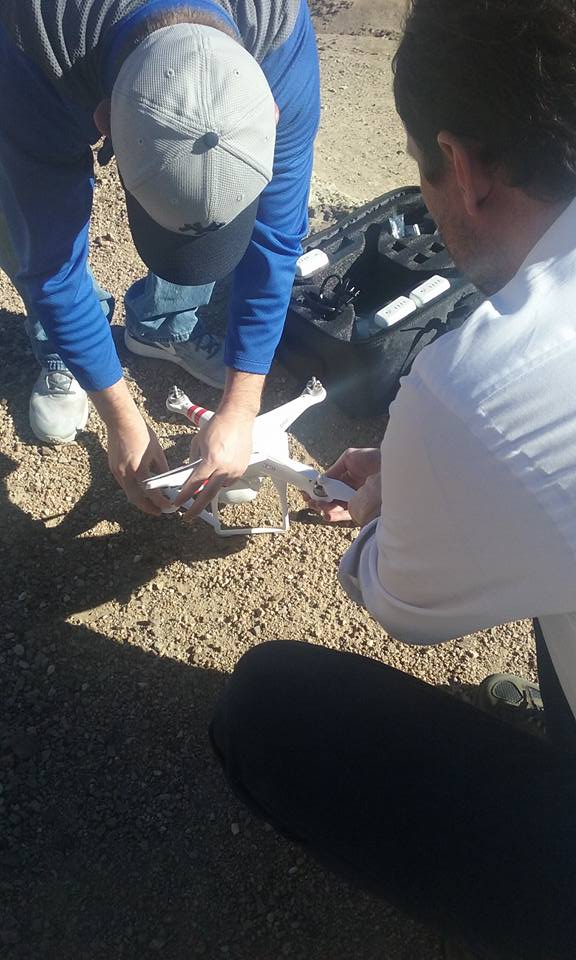
The Mojave Desert’s vast scale and minimal features make it difficult to document using traditional site analysis methods. Instead of relying on maps or photographs, this project uses aerial scanning to directly sample the landscape and generate a three-dimensional dataset.
A 3D dataset from desert terrain
The Mojave Desert’s vast scale and minimal features make it difficult to document using traditional site analysis methods. Instead of relying on maps or photographs, this project uses aerial scanning to directly sample the landscape and generate a three-dimensional dataset.
Point cloud simulation : Stigmergy
Point cloud simulation : Stigmergy
Points were simulated as agent-like entities to explore where clustering and accumulation would emerge under Stigmergic (Stabilized stigmergy refers to a rule-based interaction pattern where local rules create stable spatial arrangements without central control) rules, providing insight into how patterns might form.
Point cloud simulation : Stigmergy
Points were simulated as agent-like entities to explore where clustering and accumulation would emerge under Stigmergic (Stabilized stigmergy refers to a rule-based interaction pattern where local rules create stable spatial arrangements without central control) rules, providing insight into how patterns might form.
Form Generation And Coloration
Form Generation And Coloration
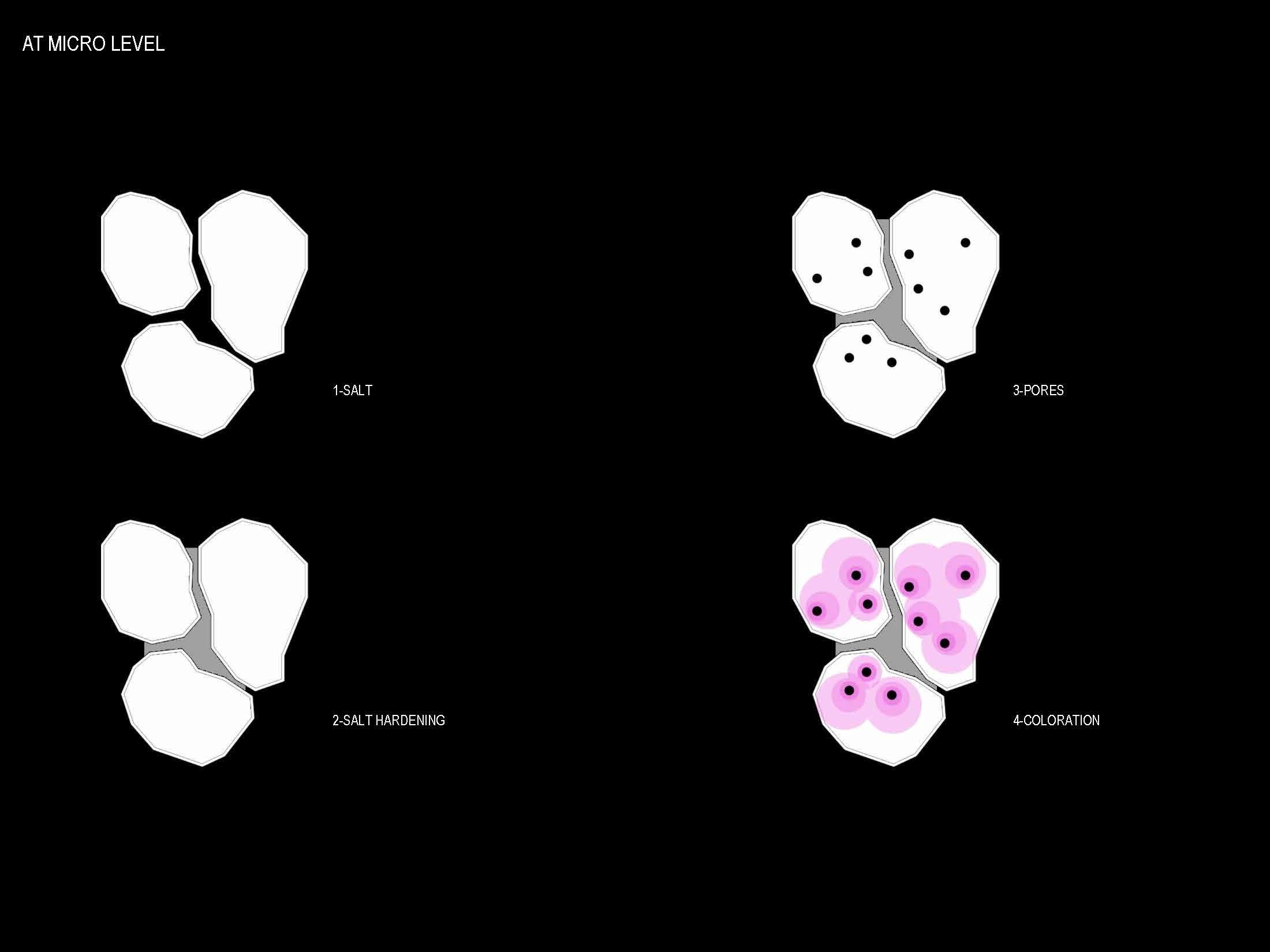
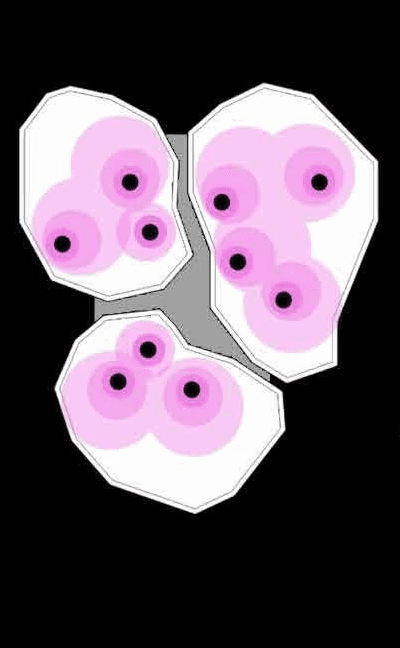
The form was generated through robotic extrusion of salt at predefined points, with subsequent hardening and pigmentation driven by bacterial growth (Serratia marcescens).
Form Generation And Coloration process
The form was generated through robotic extrusion of salt at predefined points, with subsequent hardening and pigmentation driven by bacterial growth (Serratia marcescens).
Robotics panel generation
Robotics panel generation
Robotic Facade Fabrication
Robotic extrusion generating salt deposits used as substrate for bacterial pigmentation.
Robotic extrusion generates salt deposits used as substrate for bacterial pigmentation.
The result
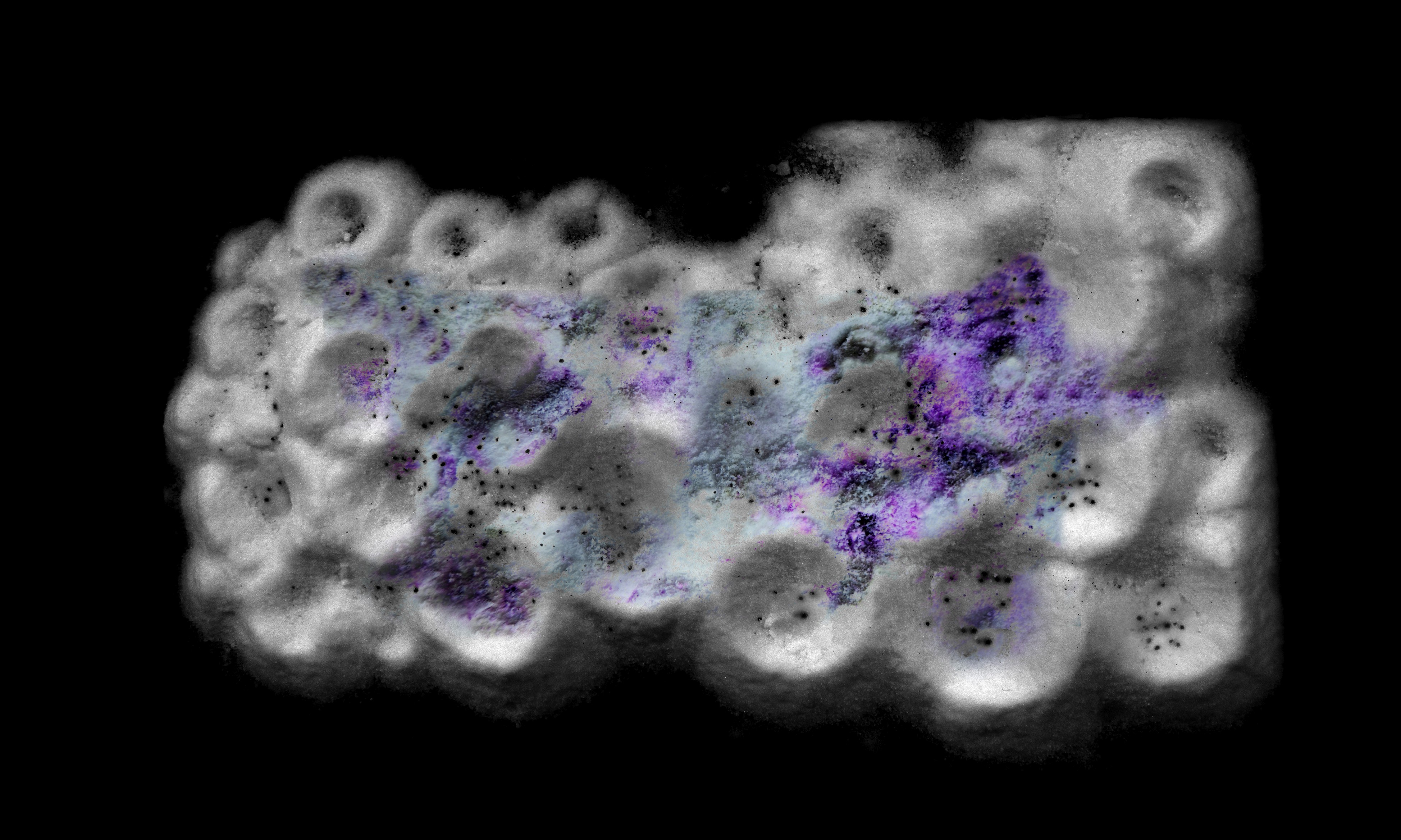
The resulting pattern is best read as a spatial dataset rather than a fixed artifact, revealing emergent clustering driven by local interactions. Regions of higher density emerged where local interactions reinforced one another, revealing spatial patterns that were not explicitly defined in advance.
Rather than representing a final object, the outcome functions as a spatial reading, translating environmental data and agent-based behavior into a materialized form.
This work laid groundwork for thinking about landscape as dynamic data, which informs my current interest in physical-digital environments and autonomous spatial systems.
This project functions as a spatial reading, translating environmental data and agent-based behavior into a materialized form.
The Result
This project functions as a spatial reading, translating environmental data and agent-based behavior into a materialized form.
The Result
Interested in working together? Let’s collaborate!
Interested in working together? Let’s collaborate!
© Tarun hari 2026