
Eduweave
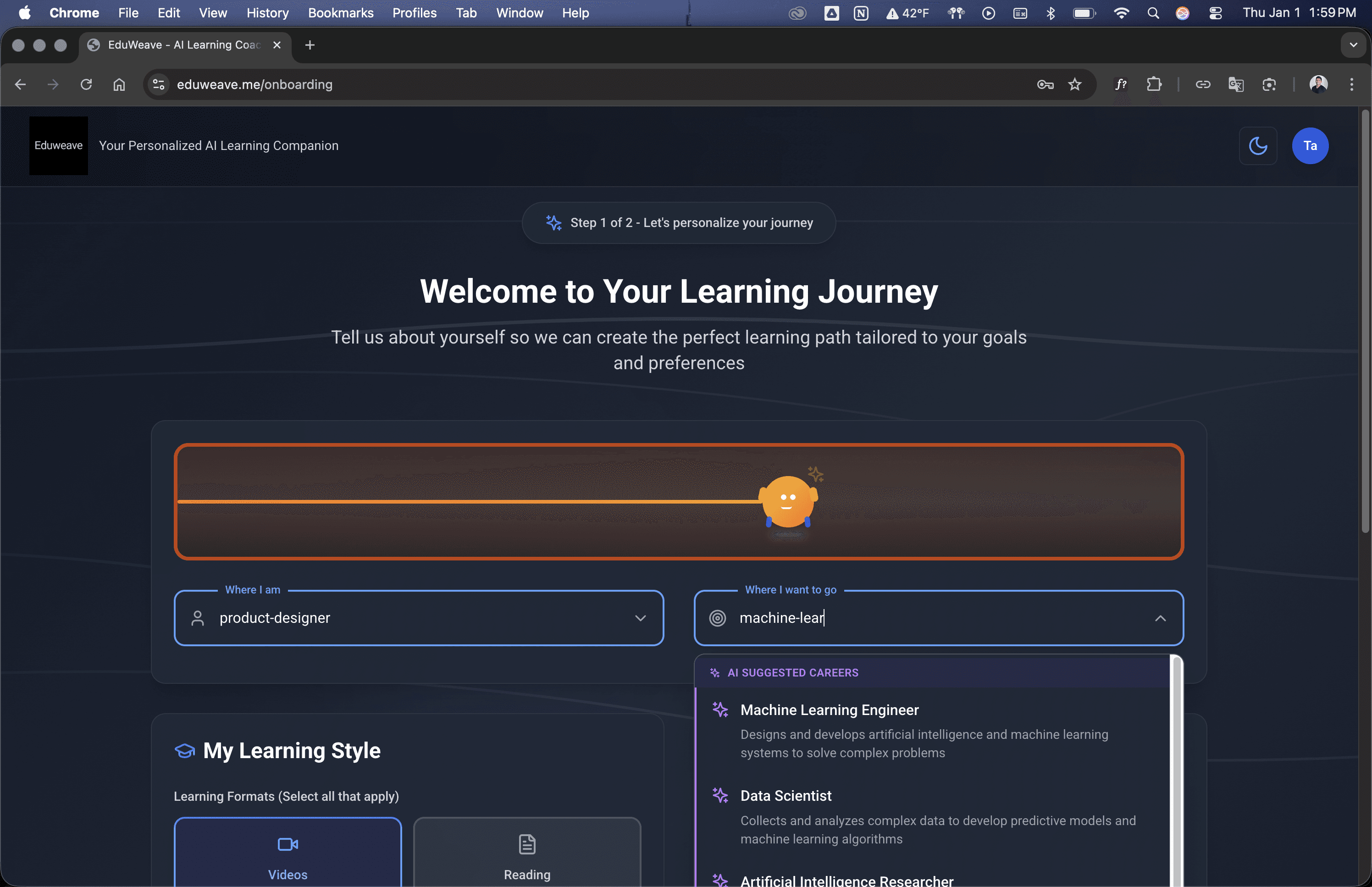
EduWeave is an AI-first learning system designed to help people structure and sustain long-term upskilling.
Built as a working MVP, the project explores how AI agents, conversational onboarding, and persistent context can move learning beyond static courses and dashboards.
I took EduWeave from concept to prototype, designing the product, interaction flows, and AI behavior while integrating live data and infrastructure. The focus was on building a credible system rather than speculative screens.
Project Context
Project Type
AI first Product Build
ROLE
AI Product Designer And Builder
FOCUS
AI Systems, Product Design, Product Management, Human–AI Interaction
TOOLS
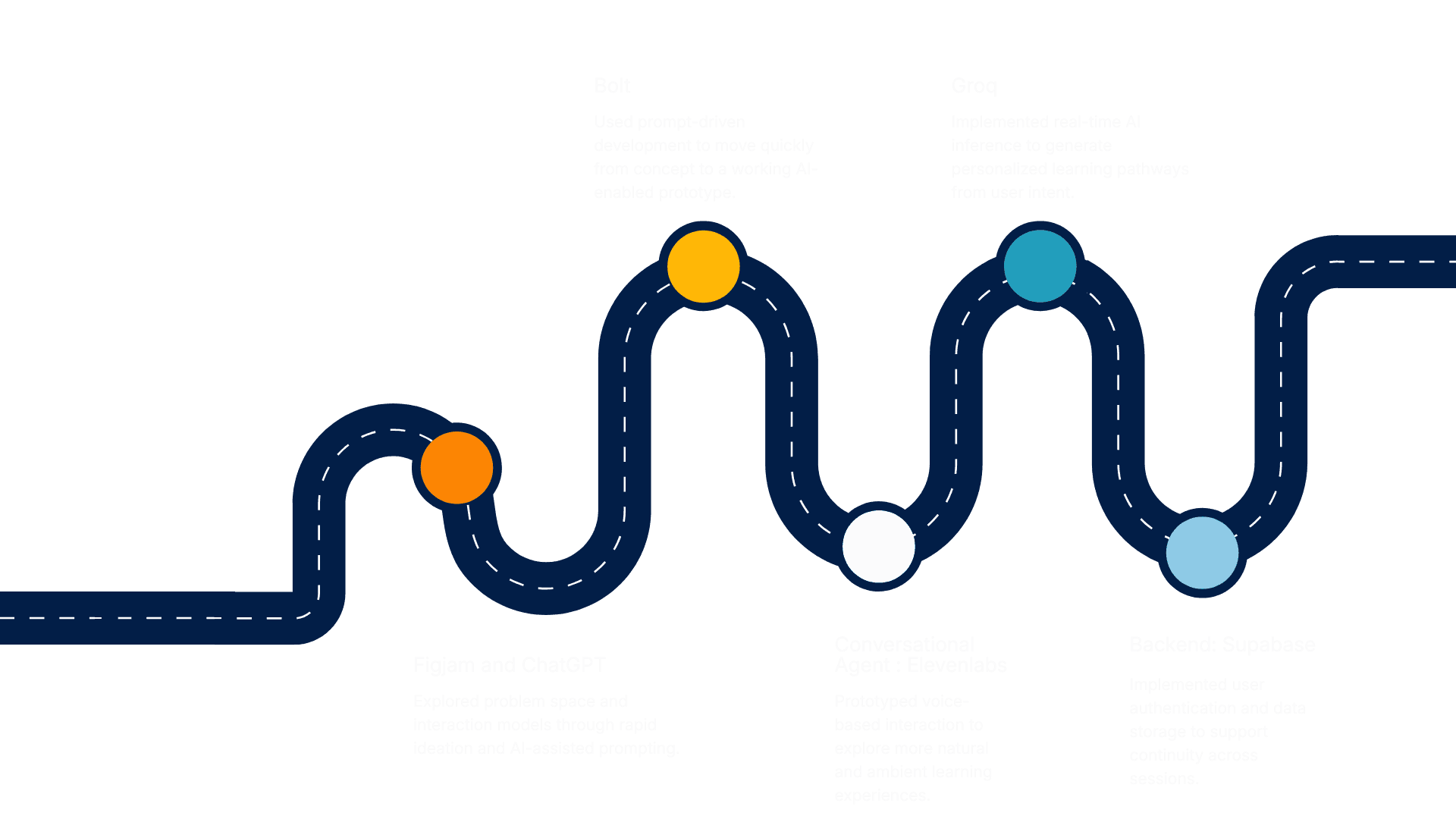
Supabase, Bolt, Elevenlabs, Groq, Figma, ChatGPT
Learning has shifted from structured, institution-led pathways to an open, algorithm-driven ecosystem. While access to courses and AI-generated explanations has increased, learners now face fragmentation, decision fatigue, and a lack of continuity.
Most platforms optimize for discovery and completion, treating learning as isolated transactions rather than a long-term, evolving process. At the same time, advances in large language models and real-time AI infrastructure make it possible to build adaptive systems that respond to intent, remember progress, and evolve over time.
EduWeave was created in this context as an exploration of AI not as a content generator, but as a learning orchestrator that supports sustained learning behavior.
The Problem
Despite unprecedented access to learning resources, individuals struggle to translate intent into sustained progress. Existing platforms emphasize discovery and completion, but fail to support continuity, adaptation, and long-term behavior change.
I wanted to explore a different question:
How might AI act as a learning companion that understands a person’s goals, constraints, and progress over time, rather than just recommending content?
My product building process
Key design decisions
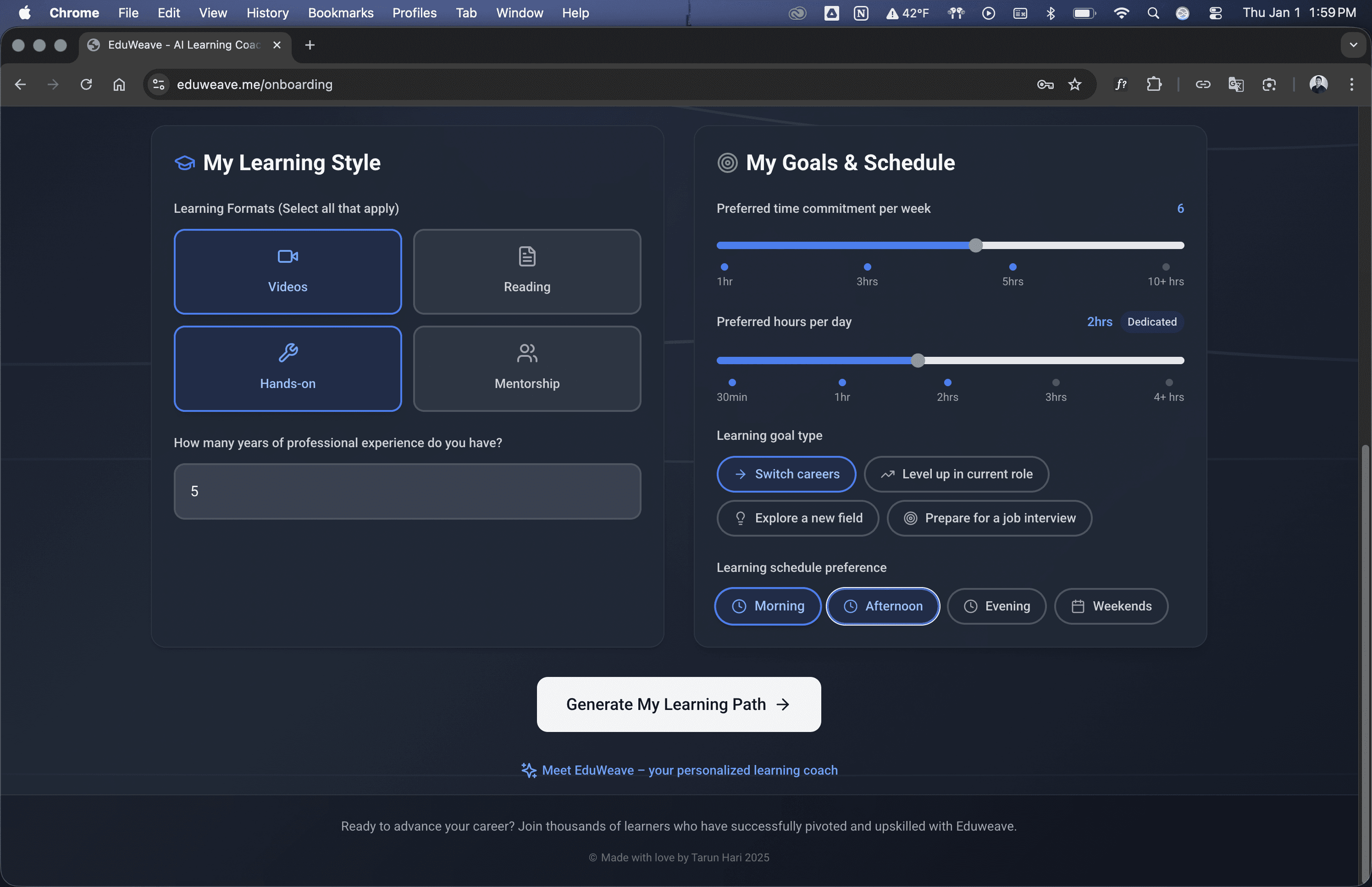
Selection over automation
Instead of fully automated the learning path, users set their preferences that can be edited later reinforcing agency and reducing cognitive overload.
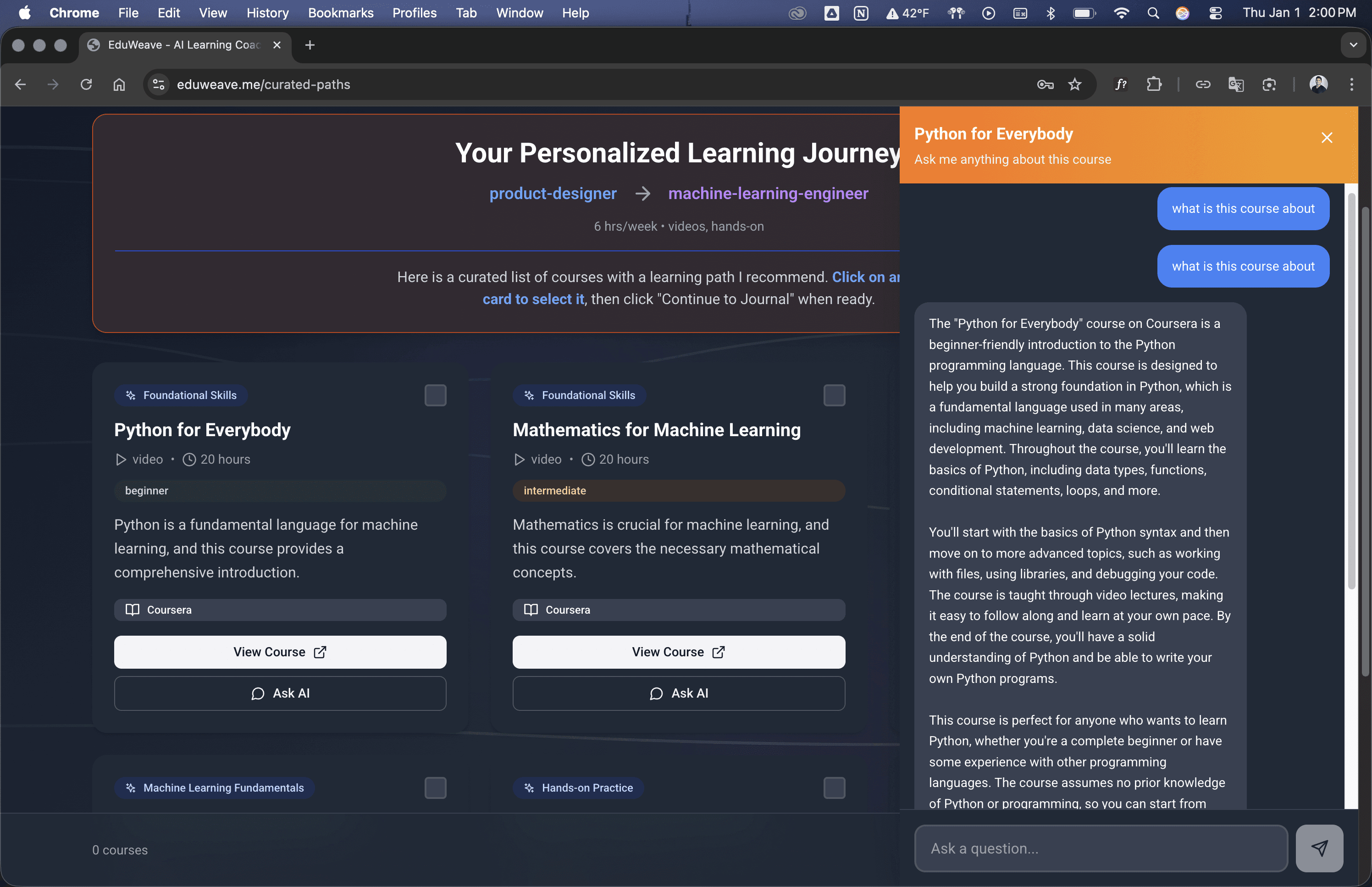
AI generated course recommendations
Groq was used as the LLM to generates course recommendations.
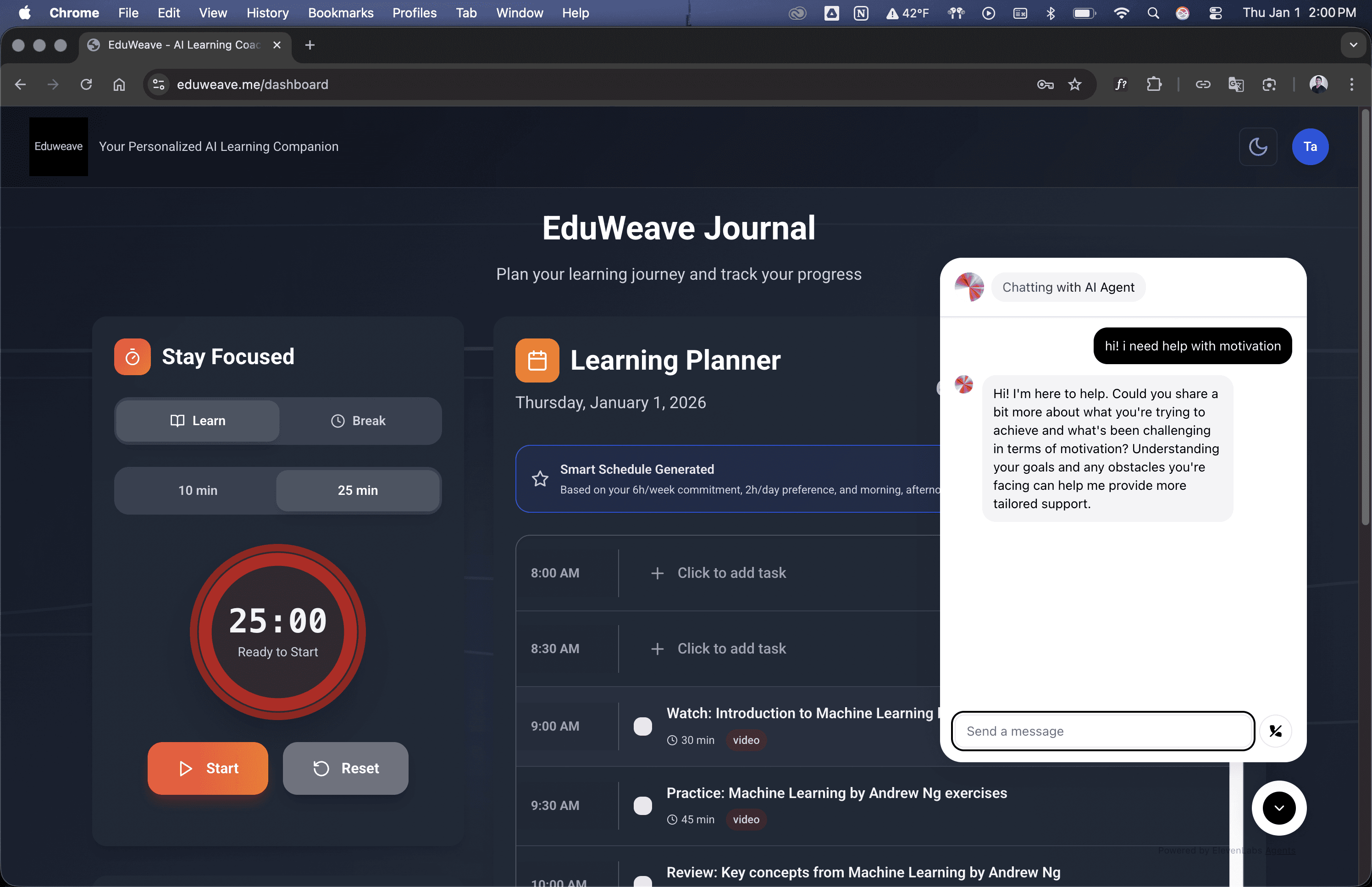
Conversational Agent as a learning companion
Voice interaction is used to help keep users motivated and on track with their goals.
What I Learned
Building Eduweave was a great experience as i learnt how to build an end to end product. What began as a quick hackathon experiment turned into a deep exploration of what it means to design intelligence itself. I learned to think beyond the interface to consider the economics of every token, the latency of every response, and how those invisible systems shape user experience as much as visuals do. Building with Groq and open APIs taught me that good design isn’t just about delight, it’s about performance, cost, and adaptability working in harmony.Designing for AI means designing constraints as much as possibilities
Users trust systems more when they can see and shape decisions
AI products require thinking in flows, states, and memory, not screens
Building even a small working system changes how you design forever
This project marked a turning point for me - from being a designer who hands off ideas to one who builds and tests them end to end. It strengthened my conviction that the future of product design lies at the intersection of systems thinking, AI, and human empathy. EduWeave is just one step in that journey, but it embodies the mindset I bring to every project: experiment boldly, design responsibly, and make technology feel human.
Why This Project Matters
EduWeave represents my transition from traditional UX toward:
AI-first product thinking
Systems design over screen design
Long-term human-AI interaction
Products that evolve with users
While this project focuses on learning, the underlying thinking applies directly to spatial systems, robotics, and ambient intelligence, where context, persistence, and adaptation are critical.